
Cooked downstairs, that morning
Food is catered by Lessing's and prepared fresh in the on-site kitchen of the Sunrise Business Center, the building we are in. Breakfast, lunch and two snacks are included in tuition, not billed on top.
Nothing comes out of a lunchbox
You do not pack anything. There is no cooler bag to remember at 6:40 in the morning and no sandwich sitting in a cubby since eight o’clock. Every meal and every snack is planned to meet the nutritional needs of the age it is served to, from a baby moving onto solids through to a five-year-old who has opinions.
Good food is not a nice extra in a room full of small children. It is most of whether the afternoon goes well. A child who has eaten properly at half eleven can hold it together through rest time, get through a STEAM activity at one o’clock and still be pleasant company at pick-up.
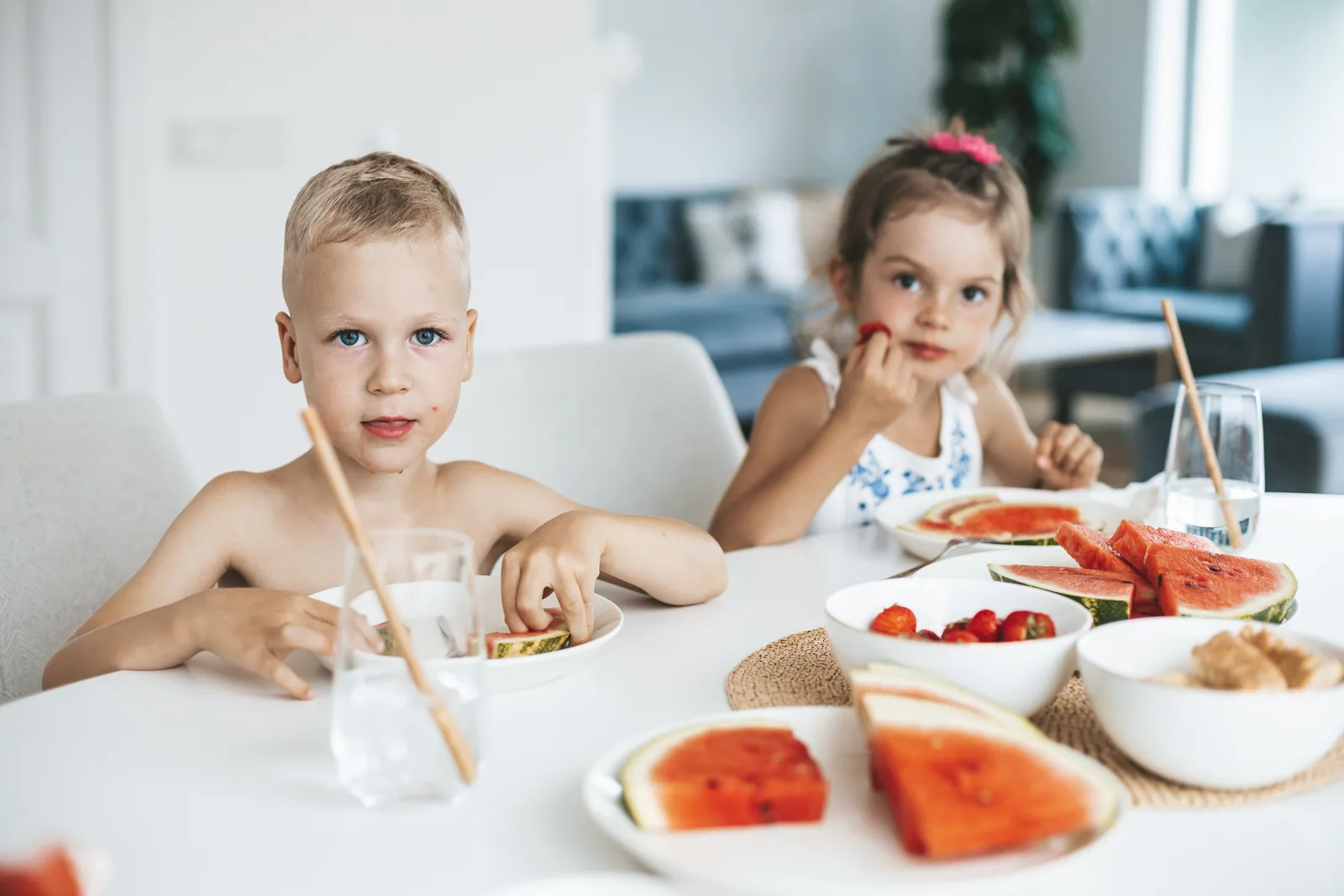
Teachers sit down and eat too
Not standing at the side supervising. At the table, with a plate, having a conversation. Almost everything a child learns at a meal comes from watching an adult do it next to them.
Table manners, in practice
Please and thank you, a fork held the right way round, scraping your own plate and pushing in your own chair. Learned at a table with an adult at it, which is the only place it is ever learned.
Doing it themselves
Feeding themselves as soon as they can, serving themselves when they are ready, pouring a drink with a hand nearby. Slower and messier than doing it for them, and the entire point.
Talking and listening
Twenty minutes of real conversation, three times a day, with somebody who answers. Taking a turn, waiting for one, and finding out what the child across the table thinks.
Trying something new
Offered, never pushed. A child who is not being made to eat the broccoli is a child who might, eventually, decide to try the broccoli.
Knowing when they are full
Recognizing hunger and fullness instead of cleaning the plate on command. It is a small thing that turns into a lifetime of how somebody eats.
Calm, family style, unhurried
The aim is a table a child is comfortable at. Included, unrushed, and not being watched. Make mealtimes something a small child looks forward to and the habits follow on their own, years after they have left us.
If your child has an allergy or an eating plan, that is a conversation we have properly at enrollment rather than a box on a form. Bring it up on the visit and we will tell you plainly whether we can handle it.
Come at lunchtime
It is the most honest half hour in any center. Ask to visit at around half eleven and watch a room eat.